

Introduction
Renting a home in Dubai in 2026 is exciting, but it comes with its own set of rules. The rental market here moves fast, and the laws that protect both tenants and landlords are strict. Whether you are looking at a standard lease or wondering how does rent to own property work, knowing the rules set by RERA is your best move.
Many expats and first-time renters find themselves confused by terms like Ejari, the RERA Rental Index, and the dubai rental increase rules. A small mistake can lead to disputes or unexpected costs. That is why having a solid understanding of your rights matters.
The Real Estate Regulatory Authority (RERA) lays out clear rules for everything from security deposits to eviction. According to recent guides on Dubai rental laws, tenants have strong protections, but they must also follow specific steps to stay out of legal trouble.
This guide covers everything you need to know. We will walk through standard tenancy contracts, explain the basics of a real estate buy-sell agreement, and break down how does rent to own property work in the current market. You will also learn how to handle a dubai rental increase fairly under the updated RERA index for 2026.
Whether you are searching for a rental property for rent in a popular area or exploring commercial spaces, finding the right broker is half the battle. Check out this guide on the smart ways to secure a property in Dubai for tips on navigating the market.
Not sure where to start? Get personalized advice from an expert who knows the 2026 market inside and out.

Reach out for a free Dubai real estate consultation today.
Understanding Dubai’s Rental Market in 2026
Step into Dubai’s rental market in 2026, and you will quickly notice one thing: rules matter here. Every lease, every payment, and every dispute follows a clear system set by the Real Estate Regulatory Authority, also known as RERA. Whether you are searching for a standard rental property for rent or asking how does rent to own property work, understanding this regulated environment keeps you safe from costly mistakes.
The foundation of everything is Law No. 26 of 2007, the main law that defines the relationship between tenants and landlords. RERA enforces this law, and it covers everything from contract terms to how you handle a dubai rental increase. According to a complete guide on RERA tenancy law, the system is designed to protect both sides fairly.
What Makes the 2026 Market Different
Expat demand in Dubai remains high this year. More people are moving here for work and lifestyle, which pushes rental prices up in popular neighborhoods. That is why knowing the rules before you sign is so important. The market has two key tools to keep things fair:
- The Ejari System: Every rental contract must be registered through Ejari. This creates an official record with the government. Without it, you have no legal proof of your tenancy. The Property Finder guide on RERA explains how Ejari works and why skipping it is a bad move.

- The Rental Dispute Settlement Centre (RDSC): If you and your landlord disagree on something like maintenance or a dubai rental increase, this is where you go for help. The RDSC handles conflicts quickly and by the book.
How This Connects to Your Search
Whether you are looking at a standard lease, a real estate buy-sell agreement, or exploring how does rent to own property work, the same regulated framework applies. Rent to own arrangements sit inside this system too, so knowing your rights under RERA helps you evaluate those deals with confidence.
If you want a step by step approach to finding the right place, check out this smart guide on securing a property in Dubai. It covers practical tips for navigating listings, brokers, and inspections.
Ready to Find Your Fit?
The 2026 market is full of opportunity, but only if you start with the right knowledge. If you are still unsure which rental path works best for your situation, get personalized guidance from someone who knows the market inside out. Reach out for a free Dubai real estate consultation today and make your next move with confidence.
Key Types of Rental Agreements in Dubai
Now that you understand how Dubai’s rental market works, let’s look at the actual agreements you will encounter. Each type serves a different purpose, and picking the right one depends on your plans.
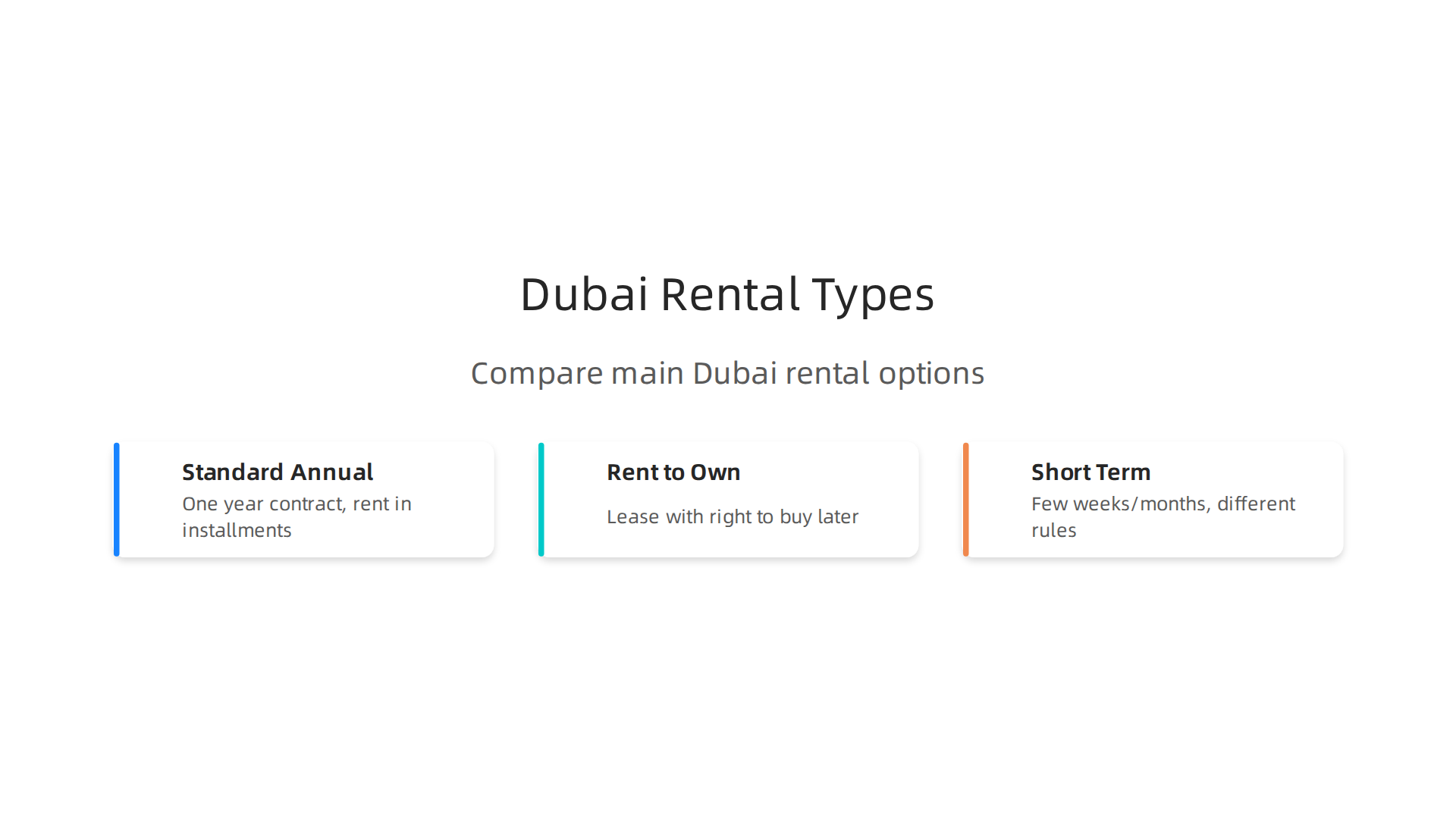
Standard Annual Tenancy Contract
This is the most common lease in Dubai. You sign a one year contract with your landlord, and you pay rent in installments (usually 1 to 4 cheques). The contract follows a template from RERA, so the basic terms are standardized. At the end of the year, the lease renews automatically unless either party gives notice. If you need a rental property for rent for living or work, this is your go to option.
One thing to watch: the dubai rental increase rules still apply here. Your landlord can raise the rent only up to the limit set by RERA’s rental index. Always check the current index before agreeing to a renewal.
Rent to Own (Ijarah) Agreements
This is where how does rent to own property work really comes to life. In Arabic, it is called Ijarah. Think of it as a lease that gives you the right to buy the property later. You pay monthly rent, and part of that payment goes toward the future purchase price.
According to a detailed analysis of Ijarah contracts, this arrangement is formed through an offer and acceptance between you and the seller or financier. It is not a loan. Instead, it is a lease contract that follows Islamic finance principles (Sharia compliant). The bank or financier must own the property first before leasing it to you. Your payments are split into two parts: one covers the rent, and the other builds your equity toward ownership.
This path works well if you want to own a home but need time to save a down payment or improve your credit. It gives you a real estate buy-sell agreement in the future, but you get to move in today.
For more details on how the whole process works, check out this simple guide to securing a property in Dubai. It walks you through every step.
Short Term (Holiday Home) Rentals
If you only need a place for a few weeks or months, short term rentals are popular in Dubai. But they come with different rules. You need a holiday home license from the Department of Tourism and Commerce Marketing (DTCM). The standard RERA tenancy law does not cover these. Instead, regulations focus on licensing, safety, and guest standards.
If you are thinking about this route, read this practical guide on short term rentals in Dubai 2026 to avoid common mistakes.
Which One Is Right for You?
It depends. If you plan to stay long term and want stability, a standard annual lease works. If you dream of owning a home but need time, rent to own might be your best bet.

And if you are just visiting or testing an area, short term gives you flexibility.
Not sure which agreement fits your situation? Get a free consultation with an expert who knows the ins and outs of Dubai’s rental landscape. Reach out for a free Dubai real estate consultation today and let Ayaz Salman help you decide.
How Does Rent-to-Own Property Work in Dubai?
So you like the idea of owning a home but need some time first. That is exactly what rent-to-own (Ijarah) is built for. It sounds complicated, but once you break it down, it actually makes a lot of sense.
In Dubai, rent-to-own works like this: you sign a lease for a set period, usually 2 to 5 years.
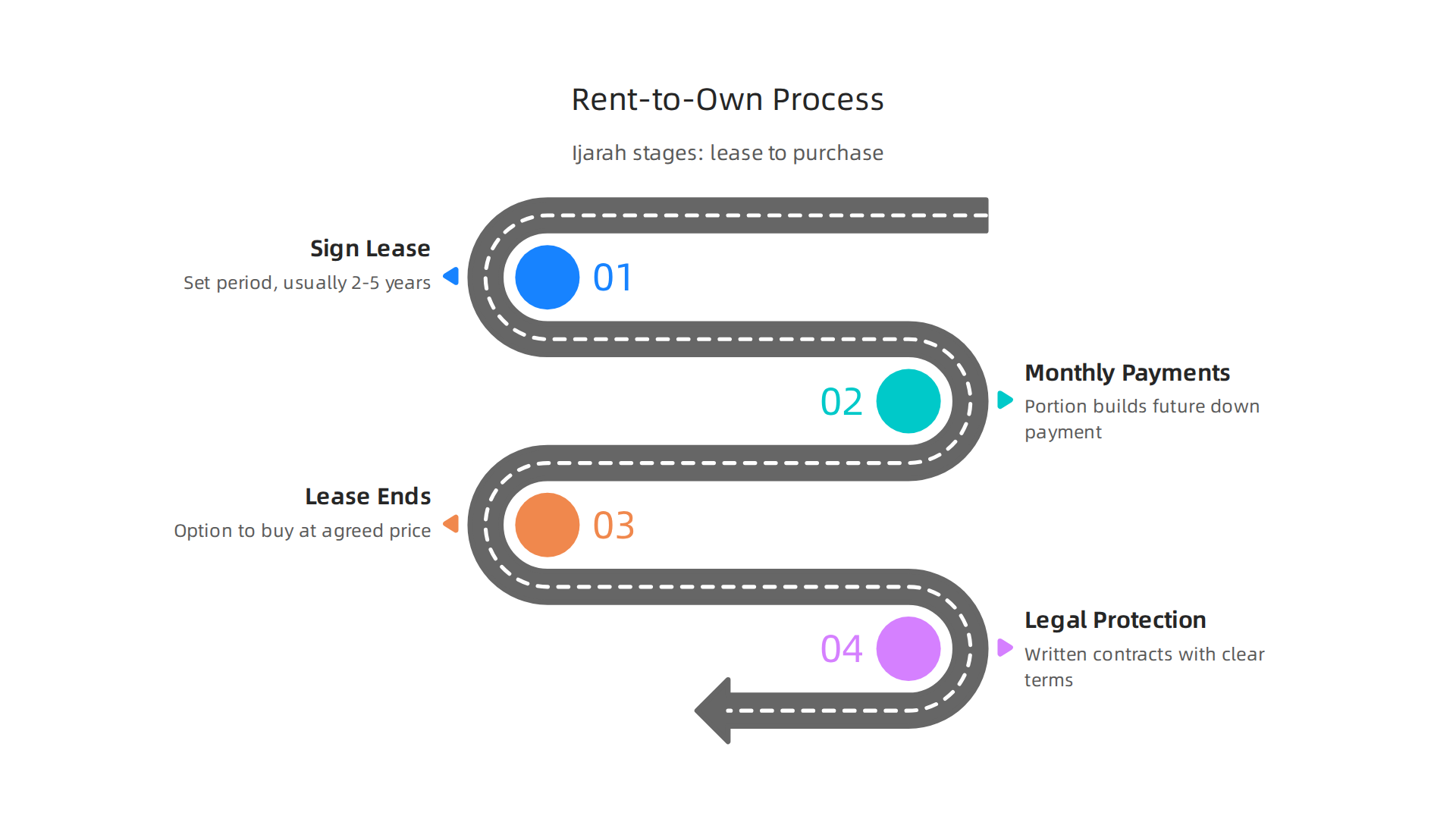
During that time, you pay monthly rent. But here is the key part, a portion of each payment gets set aside and builds up as your future down payment. Think of it as saving for a house while living in it.
According to a detailed analysis of Ijarah contracts, this arrangement is formed through an offer and acceptance between you and the seller or financier. It is not a loan. Instead, it is a lease contract that follows Islamic finance principles (Sharia compliant). The bank or financier must own the property first before leasing it to you, as explained by ADCB’s financing guidelines. Your payments are split into two parts: one covers the rent, and the other builds your equity toward ownership.
HalalWallet describes Ijarah as an Islamic lease contract where the bank or financier purchases an asset and leases it to the customer for an agreed rental payment. This is different from a mortgage because there is no interest involved.
What Happens at the End?
When your lease term ends, you have a choice. You can buy the property at a price that was agreed in the contract from the very beginning. That price is locked in, so even if the market goes up, you still pay the original amount. That is a big advantage.
One of the best parts about this setup is the legal protection. Dubai requires written contracts with clear terms. The agreement must spell out who handles maintenance, what happens if you miss a payment, and exactly how much of your rent goes toward the purchase price.
According to an explanation of Sharia compliant lease-to-own apartments, your monthly payments are split into two distinct parts. One part covers the rent, and the other builds your equity toward ownership.
Is This Right for You?
Rent-to-own works well if you want to own a home but need time to save a bigger down payment or improve your credit score. It gives you a real estate buy-sell agreement in the future, but you get to move in today.
If you are still unsure which path fits your plans, check out this smart guide to securing a property in Dubai. It walks you through every step of the rental and ownership process.
Not sure if rent-to-own is your best move or if a standard lease works better? Get a free consultation with an expert who knows the ins and outs of Dubai’s rental landscape. Reach out for a free Dubai real estate consultation today and let Ayaz Salman help you decide.
Essential Clauses in a Dubai Tenancy Contract
Whether you are looking for a standard lease or asking how does rent to own property work, your Dubai tenancy contract is the most important document you will sign. It protects both you and the landlord. But only if you understand what is inside it.
The Mandatory Clauses
Dubai law requires certain things in every tenancy contract. These are not optional. According to Bayut’s guide to tenancy contracts, every agreement must clearly state the full names of both parties, a complete description of the rental property for rent, the total rent amount, and the payment schedule. Your contract must also be registered with Ejari. Without Ejari registration, your agreement is not officially recognized by the government. This means you have less legal protection if a problem comes up.
The Optional Clauses That Matter Most
A good contract goes beyond the bare minimum. It covers the details that prevent arguments later.
Maintenance responsibilities. Who fixes the AC when it breaks in July? Who handles the plumbing? A clear contract spells this out so you are not stuck with surprise bills. The Dubai Land Department’s official tenancy guide stresses the importance of reading contract clauses carefully to identify these obligations.
Early termination penalties. Life changes. You might need to leave before the lease ends. Your contract should explain what happens. You could lose your security deposit or have to pay a penalty. Engel & Völkers notes that the termination clause is one of the most important sections to understand before signing.
Renewal terms and rent increases. How much can the landlord raise the rent? This is where Dubai rental increase rules come into play. The Real Estate Regulatory Authority (RERA) sets clear limits. Your contract should reference these rules so there are no surprises when renewal time comes.
Why Every Clause Matters
Every word in your contract has weight. A small detail you missed could cost you money or cause stress later. Whether you sign a real estate buy sell agreement to own a home or a standard lease to rent one, knowing your rights is the first step.
Reading a tenancy contract in Dubai can feel overwhelming. There are many legal terms and fine print details. This is where a trusted advisor can make a huge difference. If you are unsure which broker to trust, check out this guide on how to choose a real estate brokerage in Dubai that you can trust.
Do you have a tenancy contract you want someone to review? Are you comparing a standard lease with a rent-to-own offer? Getting expert advice before you sign can save you from costly mistakes. Reach out for a free Dubai real estate consultation today and let Ayaz Salman help you understand every clause with confidence.
Tenant Rights and Obligations Under UAE Law
Knowing your rights as a tenant in Dubai is just as important as understanding the clauses in your contract.

The law gives you real protection. But it also expects you to hold up your end of the deal. Let’s break down what that actually means.
Your Rights as a Tenant
First, the good news. UAE law gives you several powerful protections. According to the Bayut guide to tenancy contracts, you have the right to a habitable property. This means your home must be safe, clean, and in good working order when you move in. No leaking pipes, no broken AC, no electrical hazards.
You also have the right to "peaceful enjoyment." This is a fancy legal term that simply means your landlord cannot just show up whenever they want. They cannot barge in without notice. They cannot bother you at all hours. Your home is your private space, and the law respects that.
Here is the big one. You have protection from arbitrary eviction. Your landlord cannot kick you out without a legal reason. The Engel & Völkers guide to tenancy contracts explains that eviction is only allowed in specific situations, like if you break the contract terms or if the landlord wants to sell the property or move in themselves. Even then, they must give you proper notice, usually 12 months.
Your Obligations as a Tenant
Rights come with responsibilities. The Dubai Land Department’s official tenancy guide makes this clear. You must pay your rent on time, every time. Late payments can lead to serious trouble, including eviction.
You also must use the property responsibly. This means no damage beyond normal wear and tear. And here is a common trap. You cannot sublease the property without written permission from your landlord. Many tenants do this to save money, but it is a violation of your contract and the law.
Challenging Unfair Rent Increases
One of the best tools for tenants in 2026 is the RERA rental index. This online tool shows you the fair market rent for any area in Dubai. If your landlord tries to raise your rent more than the allowed amount, you can challenge it. The dubai rental increase rules are clear. Using the index gives you solid evidence to push back.
Understanding your obligations helps you stay out of trouble. Knowing your rights helps you avoid being taken advantage of. Whether you sign a standard lease or explore how does rent to own property work, these rules apply to you.
The whole system can feel like a lot to manage. That is normal. If you want to make sure you are fully protected, getting a second set of eyes on your situation never hurts. You can connect with a trusted expert for a FREE Dubai Real Estate Consultation today and walk through your contract with confidence.
Landlord Obligations and Property Maintenance
Imagine coming home to a broken air conditioner in the middle of a Dubai summer. Who pays to fix it? The answer matters a lot for your wallet and your peace of mind.
Here is the short answer. Under Dubai law, your landlord is responsible for major repairs. According to the UAE Expert Hub guide on landlord obligations, Article 16 of Dubai’s Law No. 26/2007 makes landlords legally responsible for structural maintenance, major system repairs, and anything that keeps the property safe and livable. This includes things like plumbing, electrical systems, and the AC unit.
But not everything falls on the landlord. As Betterhomes explains, tenants handle minor upkeep. Think changing light bulbs, keeping the place clean, and small fixes that come from normal daily use. The line between major and minor can get blurry. That is why a clear breakdown helps. The team at dubairentcase.com has a useful comparison that spells out exactly who pays for what.
What Landlords Must Do
The law expects three main things from landlords.
First, they must keep the property fit for living. This means it stays safe, structurally sound, and free from serious hazards. As the Olive Branch guide to UAE rental maintenance explains, the landlord must ensure the property remains safe and structurally sound at all times.
Second, landlords must respect your privacy. They cannot just walk in whenever they feel like it. They need to give you proper notice before entering, usually 24 to 48 hours. The only exception is a genuine emergency, like a gas leak or a burst pipe.
Third, they must handle repairs quickly. If you report a problem, they have a duty to fix it within a reasonable time. If they drag their feet, you have legal options.
What Happens When Landlords Fail
Here is the thing. Some landlords try to avoid their responsibilities. If your landlord ignores a serious issue, you can file a complaint with the Rental Dispute Settlement Centre (RDSC). The RDSC has the power to order the landlord to make repairs. In some cases, you can even get permission to do the repairs yourself and deduct the cost from your rent. But do not do this without proper legal guidance first.
Understanding your landlord’s obligations helps you avoid a lot of stress. Whether you are dealing with a standard rental or exploring how does rent to own property work, these rules protect you. If you face a dubai rental increase that seems unfair, you can challenge it using the RERA rental index. And if you are searching for a rental property for rent, knowing the maintenance rules helps you choose wisely.
If you are dealing with a landlord who will not fix things, you do not have to deal with it alone. The system is on your side. But it helps to have an expert walk you through your options. You can reach out for a FREE Dubai Real Estate Consultation today and get clear answers about what your landlord owes you.
Renewals, Rent Increases, and Dispute Resolution
Your tenancy contract does not just end after one year. Under Dubai law, it renews automatically under the same terms. But there is a catch. If you or your landlord want to change something, you must give proper notice. The standard rule is 90 days before the contract ends. Miss that window, and you are locked in for another year at the same rent.
Now let’s talk about the dubai rental increase. You may have heard stories about landlords jacking up the rent overnight. That does not happen legally. The Real Estate Regulatory Authority, or RERA, sets clear limits. They have a Rental Increase Calculator that tells you exactly how much your landlord can raise the rent. It depends on how your current rent compares to the average market rate in your area. If your rent is already close to the market average, the increase might be zero percent. If it is far below, the landlord can raise it up to 20 percent. But no more than that.
You can check the RERA calculator yourself. It is simple to use. Just enter your current rent and the property details. The calculator tells you the maximum legal increase. If your landlord asks for more, you have the right to say no.
What If You Disagree?
Disputes happen. Maybe your landlord demands an illegal increase. Or maybe they refuse to renew at a fair rate. In those cases, do not panic. You can file a case with the Rental Dispute Settlement Centre, or RDSC. The RDSC handles rental conflicts quickly and affordably. You do not need a lawyer to start. Just bring your tenancy contract and any evidence. The RDSC can order the landlord to follow the law.
This matters whether you are in a standard lease or exploring how does rent to own property work. A clear real estate buy-sell agreement can also help you avoid headaches. And if you are looking for a rental property for rent, knowing these rules protects you from unfair demands.
The system is on your side. But you need to know your rights. If you want personalized help, you can get a FREE Dubai Real Estate Consultation today. We can walk through your specific situation and make sure you are not overpaying.
Tips for Expat Tenants Navigating Dubai Rentals
Renting in Dubai as an expat is exciting, but it comes with extra steps. You do not need to feel lost, though. With the right approach, you can find a great rental property for rent without stress.

Here are three practical tips to protect yourself.
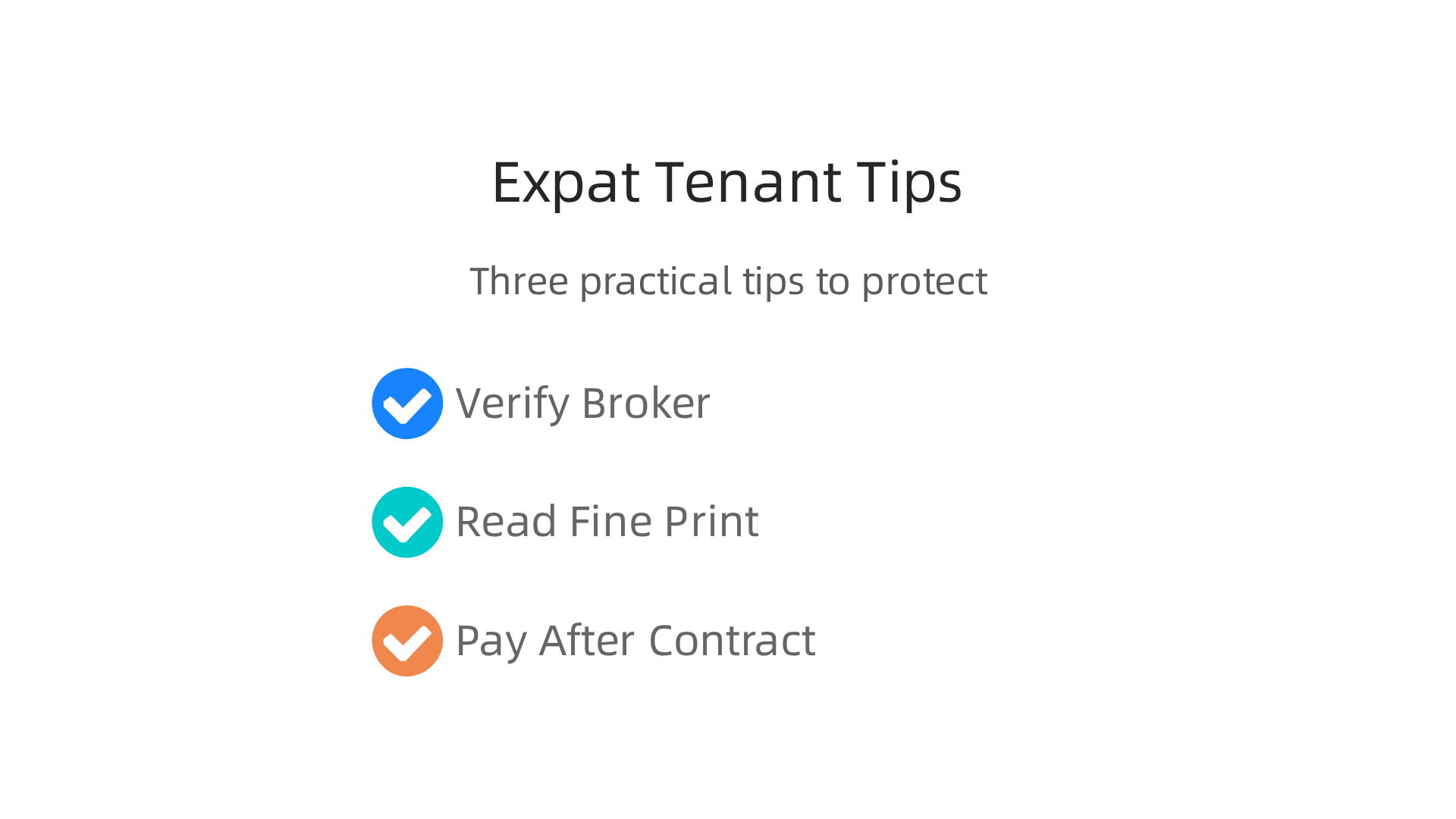
1. Always verify your broker and the property.
Before you sign anything, check that your broker has a valid RERA license number. You can verify this on the RERA website or the Dubai REST app. Also, ask to see the property’s ownership deed. This makes sure the person renting to you actually owns the place. Following this simple checklist can save you from major headaches later. If you are unsure how to pick a reliable agent, read our guide on how to choose a real estate brokerage in Dubai that you can trust.
2. Read the fine print in your contract.
Take your time reading the tenancy contract. Look closely at who handles maintenance costs. Some contracts say the tenant fixes small things. Others put it on the landlord. Also, check the penalty for breaking the lease early. This part matters whether you are on a standard lease or exploring how does rent to own property work. A clear real estate buy-sell agreement can help you avoid surprises later in any property deal. Source: Expatis guide on renting in Dubai. For a smooth start, check out the smart way to secure a property Dubai rent in 2026.
3. Only pay after a legal contract is in place.
Never transfer money to a broker or landlord before you have a signed and registered contract. Use accredited agencies and official channels. This protects you from scams and legal disputes. Remember, in the UAE, rental contracts must be registered with the local authorities to be fully valid. Source: InterNations guide on UAE Rent and Housing.
Renting in Dubai does not have to be hard. You just need the right information and a trustworthy partner. If you want personalized advice on your rental situation or exploring other options like rent to own, get your FREE Dubai Real Estate Consultation today.
Summary
This guide explains how renting a home in Dubai works in 2026, focusing on RERA rules, Ejari registration, tenancy types (including standard leases, short-term lets and rent-to-own/Ijarah), and the rights and duties of tenants and landlords. It covers mandatory and optional contract clauses you must check, who pays for maintenance, how renewals and legal rent increases are calculated via the RERA rental index, and how to use the Rental Dispute Settlement Centre if conflicts arise. The article also breaks down rent-to-own mechanics—how part of your payments build equity and how the purchase price is locked in—and gives practical tips for expats such as verifying brokers and never paying before a registered contract. After reading, you’ll know which agreement fits your needs, how to protect yourself in contracts, and when to seek expert consultation for complex cases.